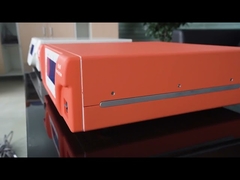
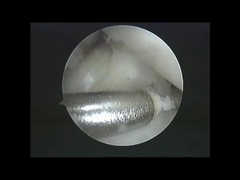
Low Temperature RF Plasma Surgery System Minimally Invasive For Turbinate Hemostasis

ENT Probe
December 14, 2025
Category Connection: ENT Probe
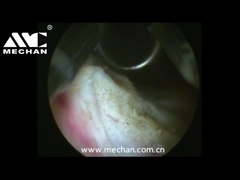
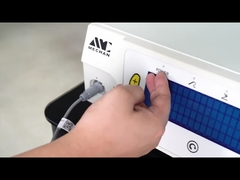
Brief: This video provides a case-style overview of the Low Temperature RF Plasma Surgery System for turbinate hemostasis. You will see a demonstration of its minimally invasive procedure, showcasing how it achieves precise ablation and coagulation with significantly reduced thermal injury and patient discomfort compared to traditional methods.
Related Product Features:
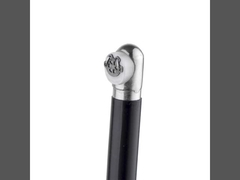
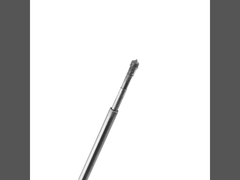
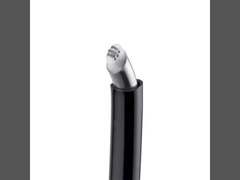
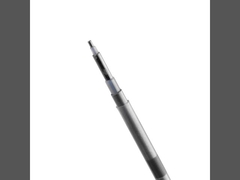
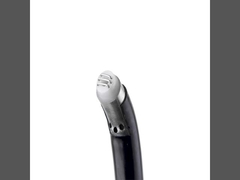
  • The PLA208 electrode is a bipolar probe designed specifically for hemostasis and ablation procedures.
  • Operating temperature is precisely controlled between 40-70°C, minimizing thermal damage to adjacent tissues.
  • Ablation and coagulation depths are controlled at ≤50μm when using recommended energy levels.
  • The system causes less thermal injury, leading to shorter wound healing times and reduced post-operative bleeding.
  • Intraoperative patient pain is significantly decreased compared to electrosurgery or laser methods.
  • Surgeons can perform hemostasis simultaneously with resection without needing additional tools.
  • The system has no electric current passing through the patient's body during operation.
  • The product meets rigorous biocompatibility standards including EN ISO 10993-5 and EN ISO 10993-10.
Faqs:
  • What are the main advantages of this plasma system over traditional surgical methods?
    Compared to electrosurgery and laser, this system operates at lower temperatures (40-70°C), causes less thermal injury to adjacent tissue, results in shorter healing times, reduces patient pain, and allows simultaneous resection and hemostasis without additional tools.
  • What procedures is the Low Temperature RF Plasma Surgery System indicated for?
    The system is specifically indicated for hemostasis and ablation procedures, particularly for turbinate hemostasis in minimally invasive surgeries.
  • What safety certifications and standards does this product meet?
    The system has obtained CE and RoHS certificates, passed EMC detection, and complies with multiple international standards including EN 60601-1, EN 60601-2-2, EN ISO 10993-5, EN ISO 10993-10, and EN ISO 11607-1 for biocompatibility and safety.
  • How does the temperature control benefit the surgical outcome?
    The precise temperature control at 40-70°C ensures the shrinking of collagen molecules while maintaining cell vitality, resulting in controlled coagulation depths of ≤50μm and minimal thermal damage to surrounding tissues.