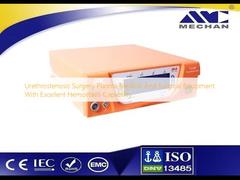
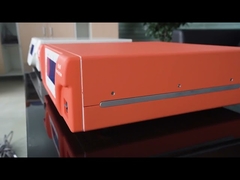
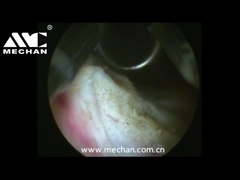
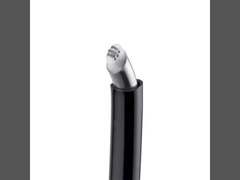
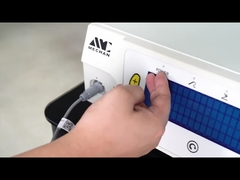
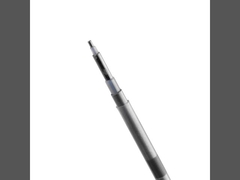
Brief: Follow along for a hands-on demonstration that highlights performance points of the Urology Plasma Generator. This video showcases how the plasma surgical device operates for BPH surgery, urethral stricture, and bladder tumor procedures, emphasizing its minimally-invasive approach and low-temperature ablation capabilities. You'll see the generator, footswitch, and treatment probes in action, illustrating the system's safe and reliable performance in a clinical setting.
Related Product Features:
Performs bipolar or multi-polar cutting with low-temperature ablation, resection, hemostasis, and coagulation for minimally-invasive procedures.
Offers two ABLATION modes for channeling, resection, hemostasis, and ablation functions.
Includes one PLACOAG mode dedicated to hemostasis and coagulation tasks.
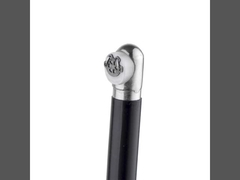
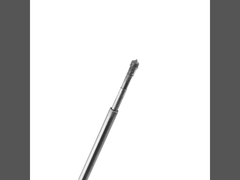
Provides various probe types with customizable length, diameter, radian, and energy levels for different surgical needs.
Features multi-function probes that handle ablation, coagulation, hemostasis, and resection without frequent changes during surgery.
Generates plasma energy transmitted via a treatment handle and probe for precise targeting.
Supports automatic voltage conversion for global use with input ranges of 198-242V 50Hz or 100-122V 60Hz.
Delivers output power up to 350W for ablation/resection and 110W for coagulation/hemostasis.
Faqs:
What surgical procedures is the Urology Plasma Generator indicated for?
The device is indicated for treating BPH (Benign Prostatic Hyperplasia), urethral stricture, bladder tumor, and similar urological conditions using plasma energy for ablation and resection.
How does the plasma generator ensure minimal tissue damage during surgery?
It utilizes low-temperature plasma ablation and bipolar/multi-polar cutting, which reduces thermal spread and tissue damage, making it a safe and minimally-invasive option for delicate urological surgeries.
What components are included with the Mechan Urology Plasma Surgery System?
The system includes a tabletop generator device, a reusable power supply cable, a footswitch, a treatment handle for foot control, and various treatment probes designed for different surgical requirements.
Can the same probe be used for multiple functions during a procedure?
Yes, the multi-function probes allow for ablation, coagulation, hemostasis, and resection all from the same handle and output socket, eliminating the need to change probes frequently during surgery.